A video production workflow is the repeatable process a team follows to plan, shoot, store and reuse footage. Trackman's in-house team runs one for everything from global product launches to day-to-day social clips. In this conversation, they explain how they plan shoots and build a reusable B-roll library. They also show how everyone in marketing gets self-service access to more than ten years of footage.
Key takeaways
- Every shoot covers the current project and the future library
- A yearly cycle and the product roadmap show which footage is missing
- Footage is uploaded and tagged before editing starts
- Shots are framed so they can be reused anywhere
- The whole marketing team finds footage on its own, in seconds
A growing demand for content, across every channel
The landscape is evolving fast. More people inside Trackman request content, and the company wants to tell more stories. Every story has to work on LinkedIn, Facebook, Instagram and YouTube at once. That means content tailored to every format, while shooting only once.
The team's output covers a wide range: large product launch campaigns, small and big feature releases, tournament coverage and small day-to-day videos.
Customer stories at the centre
This year Trackman is putting more focus on letting customers tell the story. A customer's voice is a strong one to get out in the market. Most of what the team shoots right now is customer case stories with its biggest clients. These are mainly in the US, with some in Europe.
They want to hear from the people running golf clubs, and from coaches and players too, because each group has different needs.
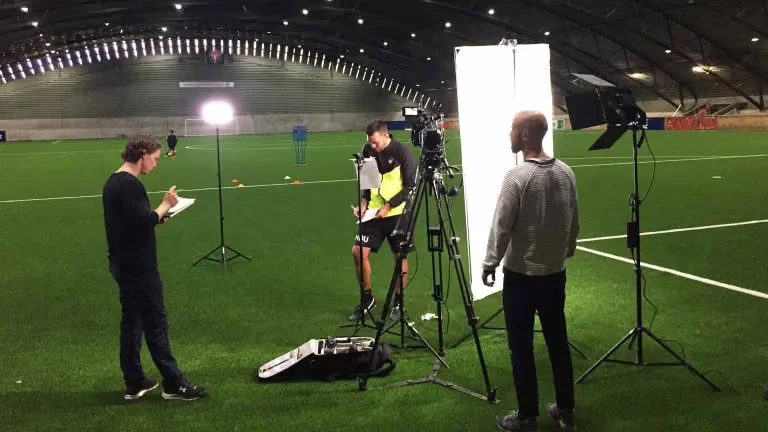
The production schedule is tight: usually two days on site. Day one covers the interviews, and day two is for B-roll. Done right, those two days produce a huge amount of content. The shot list is long, time consuming and weather dependent, so planning ahead is essential.
Planning shoots around the product roadmap
Every shoot has two jobs. It has to deliver what the current project needs, and it has to cover what the team might need in the future. That means shooting broad B-roll at every location, to build as extensive a B-roll library as possible. Every shoot also includes a broad variety of people, not only young golfers or only female golfers.
Planning follows a yearly cycle. The indoor season runs from October to March, and the outdoor season from March to November. Shoots are planned well ahead for both.
The team also keeps the product roadmap for the coming half year in mind. When Trackman launched Trackman iO two years ago, there was no indoor footage of it at all. Rebuilding the library with indoor material became essential. Gaps like that show up regularly, and the roadmap is how the team spots them early.
From scattered drives to one searchable library
Before Mediacloud.ai, footage was scattered. Drives got lost. Crews kept a backup of a backup, and the pile of disks kept growing. Knowing where any content lived depended on whichever photographer or DP had been on that shoot.
It also depended on memory. One team member has been on every shoot for the last six years. Finding old material meant relying on him to remember a shoot from three years ago, and which folder it ended up in. As the department grew and hired more videographers, that stopped working.
Today the routine is fixed. Back up the camera cards, sort what was shot, and upload it before anyone starts editing. Disks remain as backups only. If you're setting up the same routine, our guides on storing corporate source footage and naming files and folders for creative projects cover the details.
Tagging and search: how footage gets found
The library goes back to 2015. Most material is tagged by location, date, photographer and case name. When a customer story lacks enough B-roll, the team searches other cases for footage where the location can't be identified. Palm trees are the usual giveaway.
The working method is simple. Find the snippets you need, put them in a collection, and share it with the editor with notes on which parts to use. In practice, that means storyboarding a new video from existing footage.
A recent example: Trackman needed a video to recruit new on-site installation crew, without travelling to film it. The team scouted the archive and found everything they needed, some of it from 2016. It had been shot in closed environments with no screens visible, so nothing gave away its age. The video was ready practically from one day to the next.
Does reusing B-roll kill creativity?
No. In the team's words, the creativity lives in the brief and the idea of the video, not in filming new footage every time. Reusing B-roll that is a few years old is often smarter than spending time and budget on a new shoot. That's the core idea behind content recycling.
What about the audience? According to the team, the marketing department is the one that gets tired of seeing the same footage. The audience doesn't see it the same way.
More output, bigger shoots
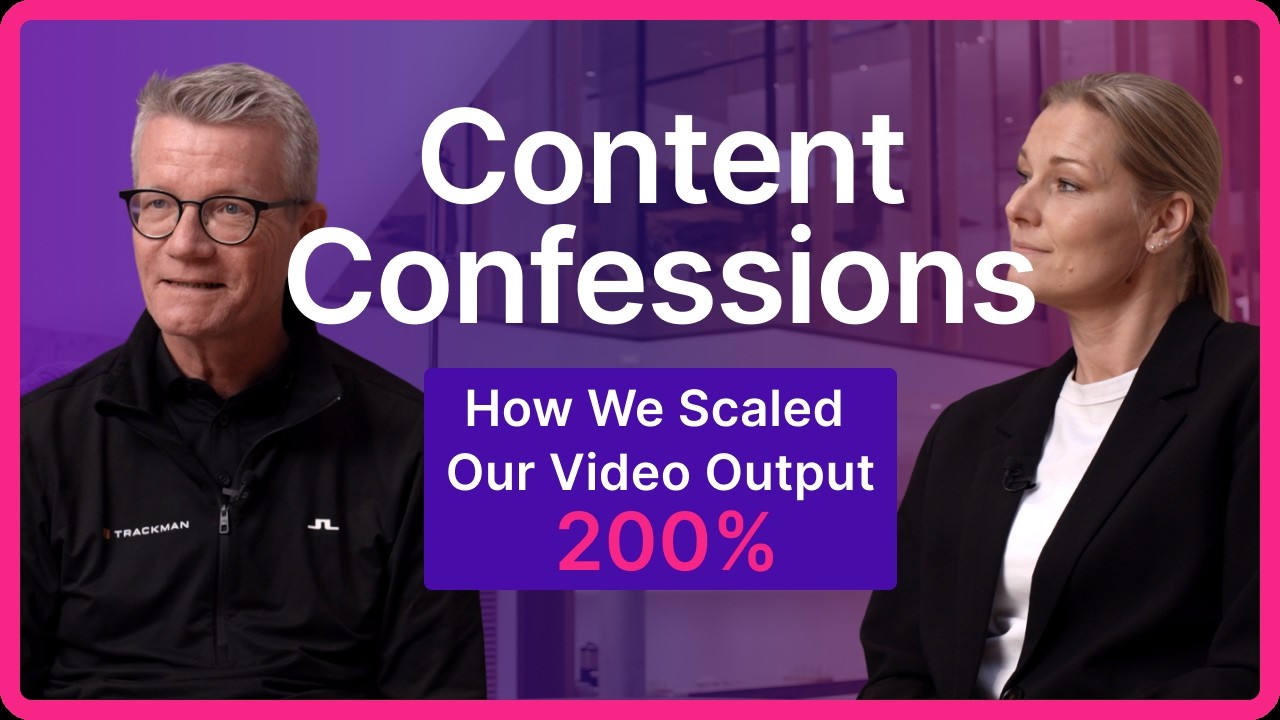
The team estimates its output is at least 200% higher than the year before. Demand keeps growing across channels, for video and animation alike. Big photo and video trips used to happen every third year. Now it's every second year, if not every year.
A shoot today can mean five days at one location, capturing material meant to last several years. The team plans for what they came for, and stays open to what comes up: a beautiful sunset, a chance to interview the club owner. That kind of content can turn into gold.
A case shot three years ago became the model for every case since. It's now the brief freelancers receive.
Working with freelancers worldwide
Trackman produces content all over the world and works with a wide range of external photographers. A US-based photographer was recently onboarded on Mediacloud.ai. He ran the QR-code consent registration on site and uploaded all the footage from the shoot directly to the platform. The team has used the same QR-code flow in the UK too.
Before, consent forms were always a headache: emails back and forth, forms to fill out, preprinted paperwork. Now the project is set up in Mediacloud.ai and the crew shows the QR code to each participant on location. People scan and sign, and every consent ends up stored with the footage.
Shoot once, reuse it for years
The team's advice to other in-house teams comes down to cost. A close-up of a golf ball at an exotic location needs a lighting person, a photographer and a model on site. That one shot is expensive, but it can be reused again and again without travelling anywhere.
That's why the team often frames shots so the location can't be identified. Most of their cases could be California, the UK or Spain. They film both versions: the shot that shows the place, and the one that stays recyclable. It's the approach we describe in Adopting a Recycling Mindset.
Old footage still matters too. Some of it was filmed with a Phantom high-speed camera. That camera is slow to set up, needs a lot of light and is expensive to rent. Going back to that material is far cheaper than shooting it again.
Self-service for the whole marketing team
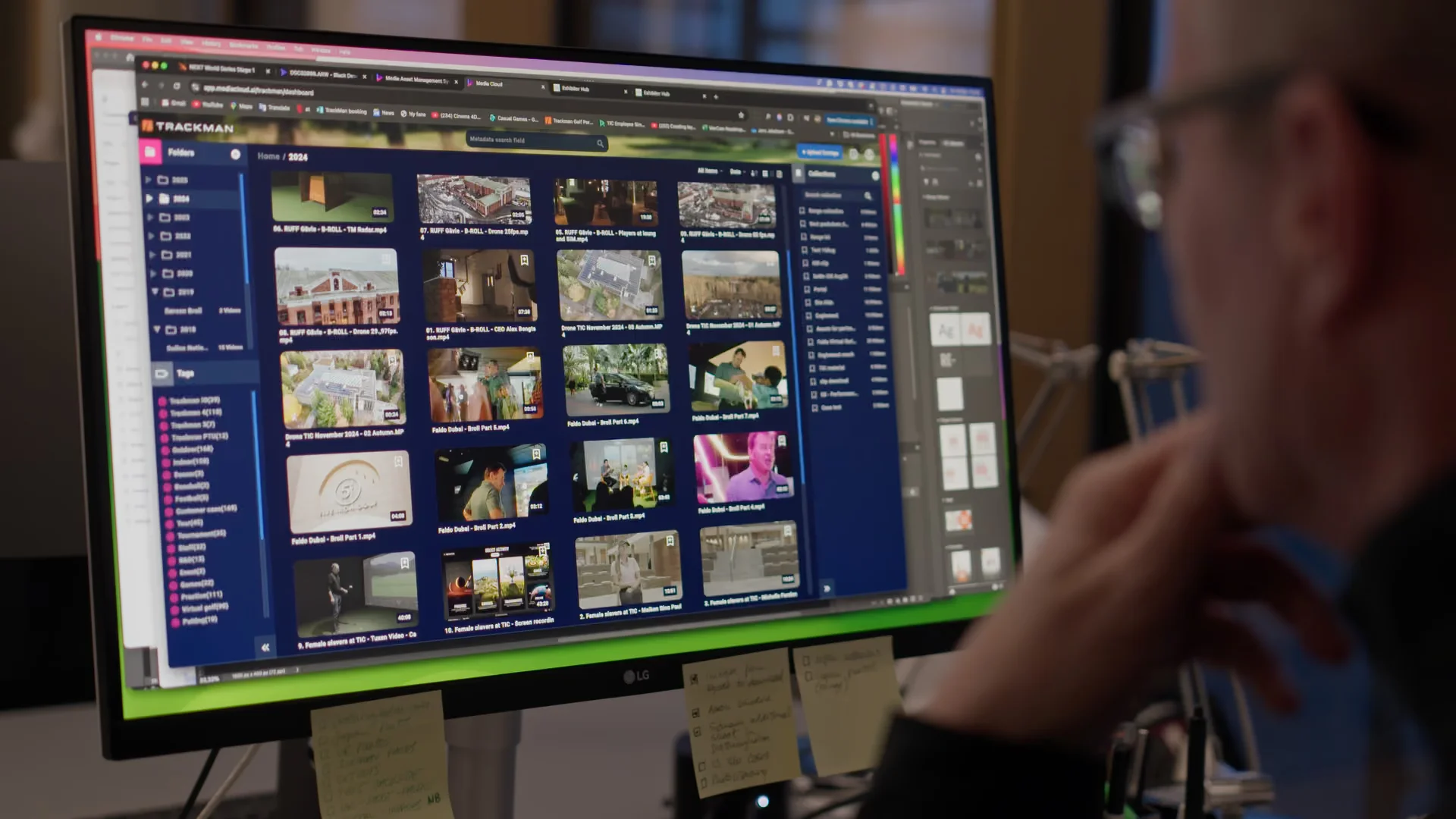
Today, anyone with a login can answer "do we have footage of this?" within seconds, and from which angles. Users range from product marketing managers and project managers to art directors, video editors and motion graphic designers. Instead of asking the person who remembers, they check the library themselves and scrub through it.
A small group acts as gatekeepers. They curate what goes into the library and make sure it's tagged the right way. Requests from outside marketing still go through them, while inside marketing it's fully self-service.
Footage is uploaded with a basic grade, so what the team scrubs through already looks good. Small thumbnails make scrubbing fast, and the full version is there when someone needs a specific moment. That also makes it easy to show an art director or editor exactly which part to cut.
The questions still come often. The difference is the answer. Before, "no, we only have this" always came with doubt about some old folder lying around. Now the team answers with confidence: what's in the library is what they have.
In-house: a blessing and a curse
Both team members came from the agency side. Having everything in-house means they can do hundreds of iterations and produce a full new video within a day.
The lesson they learned: going back and forth on corrections with an external videographer is very time consuming. That's especially true when they work in another time zone and are busy with other projects. With every project stored in a collection, a project can be handed to someone else at any moment.
The flip side is that demand for faster content keeps putting pressure on the team.
Frequently asked questions
How does Trackman plan a customer case shoot?
Usually two days on site: day one for interviews, day two for B-roll. The shot list is long and weather dependent, so it's planned well ahead. The product roadmap and the yearly indoor and outdoor seasons guide the plan.
Why shoot more B-roll than the current project needs?
Because the same footage can be reused for years. Every shoot covers the current project and builds the B-roll library for future ones, which saves time and budget on new shoots.
Doesn't reusing old footage make content repetitive?
According to the Trackman team, the marketing department gets tired of the footage long before the audience does. Creativity lives in the brief and the idea of the video, not in filming everything new.
How does the team find footage in a library that goes back to 2015?
Everything is tagged by location, date, photographer and case name. Anyone in marketing can search, scrub through graded previews and collect the clips they need in a shared collection for the editor.
See your own footage library in action
Want your team to find any clip in seconds, with consent attached? Book a demo of Mediacloud.ai.
Label variant
Body
Title variant
Body
Term
Definition
Question
Key risk: red variant
- List item